The Smúz Lab Manifesto.
Smúz is the place. Energy is what you feel there.
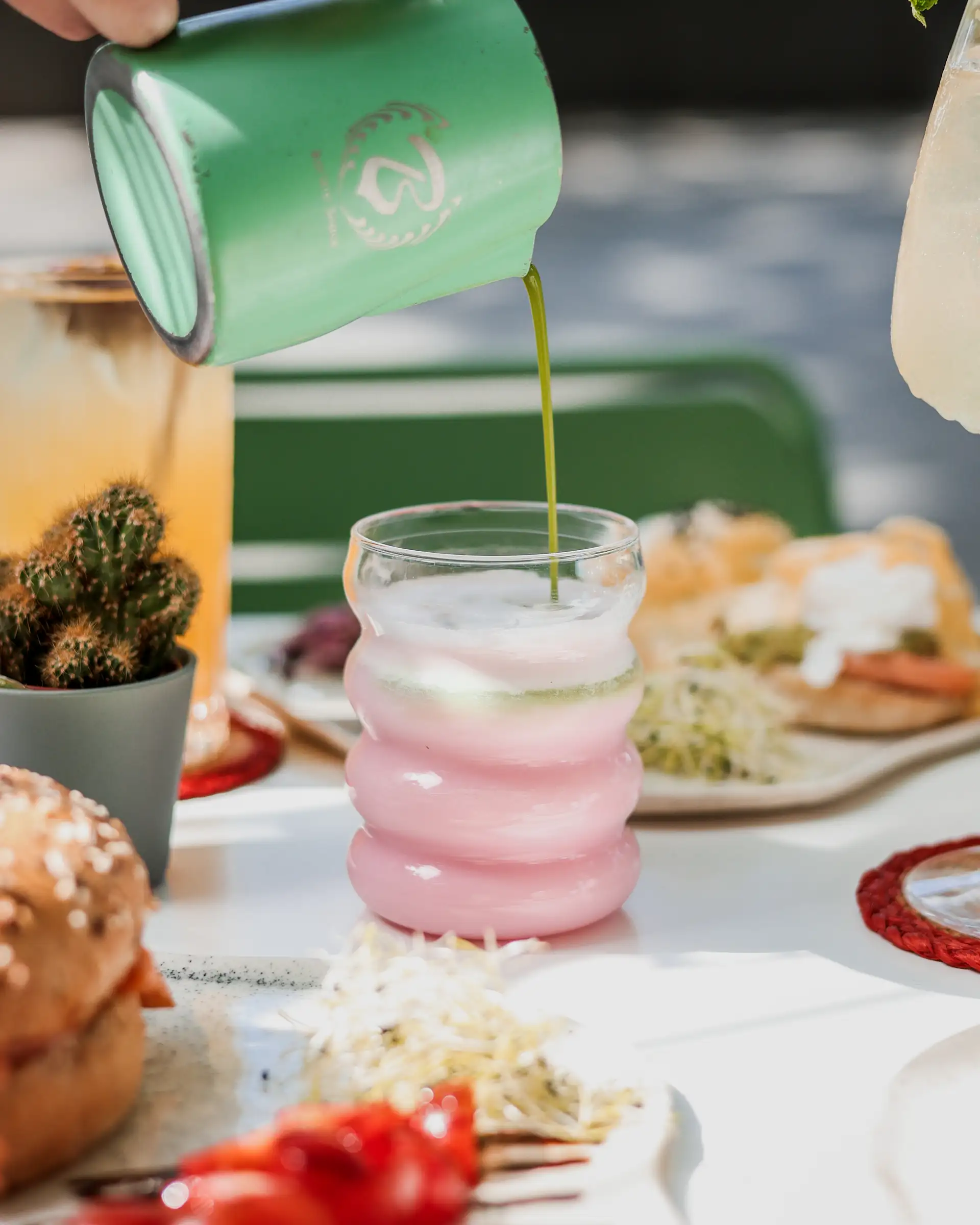
The Smúz Lab Manifesto.
Smúz is the place. Energy is what you feel there.
Smúz is the place. Energy is what you feel there. Smúz Lab is where that energy takes a new form. Memory is what you take home.
This is not a marketing document, a website page, or an investor deck. It is the founding philosophy of a brand — written with the discipline of something that should still be worth reading in twenty years. Every claim in it is meant to survive one test: could this paragraph belong to any other brand? If it could, it does not belong here.
Everything in this document connects back to one idea, so it is stated first, plainly, and never needs restating: Smúz Lab is not in the business of caffeine, or stimulation, or supplementation. It is in the business of human energy — the kind a person runs on, not the kind a compound provides. An ingredient can support that energy. It can never be the subject of it.
This single distinction is the spine the rest of the manifesto is built on. Not a chapter about energy, followed by chapters about other things. Energy, running through every section that follows — through the states a drink can serve, through the city that feeds the recipes, through the room where they are tested, through the reason none of it can be copied, and through the memory a guest eventually carries home.
A drink at Smúz Lab is never designed to be liked in general. It is designed to serve one specific state — and it is allowed to exist only if it genuinely does.
For the slow, uncertain hour when a day has not yet found its shape.
For afterwards — after a run, a long shift, a late night, an effort of any kind.
For the kind of focus that does not feel forced, borrowed, or jittery.
Built for a table, not a desk. For conversation, not concentration.
For the moments that deserve something a little more festive than the rest of the week — the kind of order that makes a neighbouring table lean over and ask what it is.
For doing, deliberately, less — a state most menus never plan for on purpose.
For the moment someone encounters something genuinely new. Not excitement, not entertainment — curiosity, rewarded, occasionally with a laugh attached. It is one of the main reasons people travel at all, and it belongs at the centre of a beverage philosophy built inside a city most of its guests are only visiting.
An eighth word sits underneath all seven, rather than beside them: hospitality. It is not a state a drink belongs to — it is how every one of the seven is delivered. A Morning drink served without warmth is not a Morning drink; it has simply failed at hospitality and succeeded at nothing.
A laboratory in the ordinary sense is sealed off from the world so that nothing uncontrolled can interfere with the result. Smúz Lab is built on the opposite principle: nothing here is sealed off from the city, because the city is the experiment.
Every morning the same room absorbs an unusually wide range of human states, without ever staging them together. A runner arrives having just finished, needing recovery, not stimulation. A diplomat arrives between two meetings, needing ten minutes of clear focus. A visitor arrives having just left the Parliament, still processing what they saw, wanting nothing more than to sit with it. A neighbour arrives out of pure habit, wanting nothing to change at all. A student arrives to work, an artist to think, a business traveller to recover from a flight two hours before a meeting — and someone, most weeks, who orders a drink purely because they liked the sound of its name.
None of them are told what to feel. Smúz Lab simply pays attention to what they already do. This is the sense in which the city itself is part of the research process. A new recipe is not validated by a focus group or a market report. It is validated by whether it earns a second order, unprompted, from someone who had no reason to be polite about it.
Budapest does not appear in this document as a backdrop or a marketing theme. It appears as the input — the daily, unpredictable, real supply of human states that no laboratory anywhere else could manufacture on purpose.
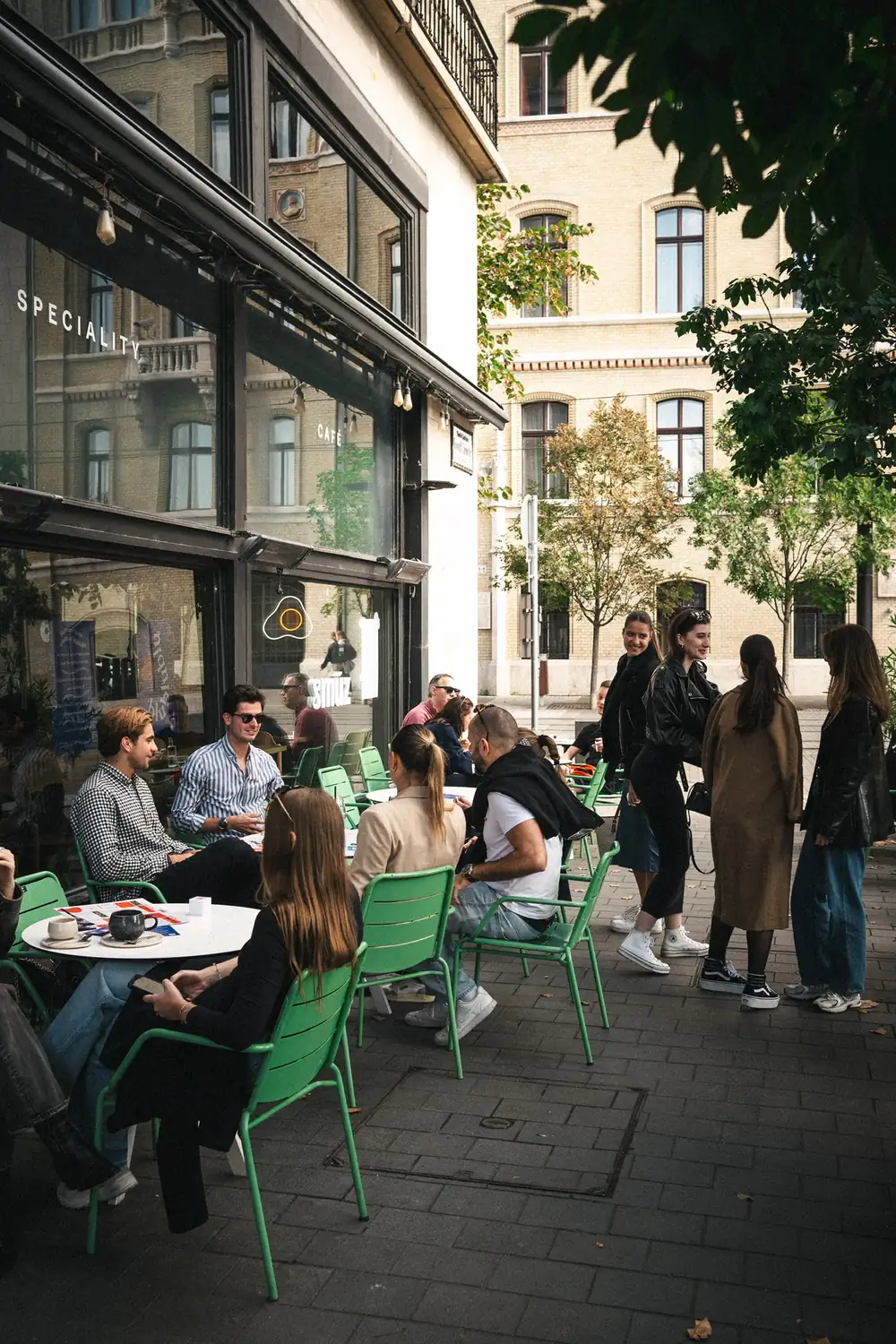
Most beverage companies develop behind closed doors: a test kitchen, a panel of employees, a launch date decided long before a single real guest has tasted anything. Smúz Lab works the opposite way. Every new idea is developed in front of guests, in the same room where it will eventually be judged — which means it is being judged from the very first day it exists.
A new recipe might appear quietly, without an announcement, on a single Tuesday — known for its first few days only by a nickname on a handwritten note, long before it deserves a real one. If nobody asks for it again, it disappears without ceremony, and nothing is lost except a small amount of ingredients. If it earns a second order, unprompted, from someone who had no idea they were being asked a question, it survives another week. Only after weeks of this — of ordinary mornings, not planned trials — does a recipe earn a name, a place on the counter, and the right to be called part of Smúz Lab.
The guests who order it during that period are not test subjects. They were never told they were participating in anything. They are collaborators in the only honest sense of the word: their real, unprompted choices are the only data that ever mattered. No focus group has ever been assembled. No survey has ever been sent.
The café is the laboratory, in the most literal sense the word allows — and it is, without exaggeration, one of the few genuine advantages Smúz Lab has that almost no beverage brand anywhere else in the world can claim.
A competitor can buy matcha. They can buy collagen, spirulina, adaptogens — every ingredient in every Smúz Lab recipe is, in principle, available to anyone with a supplier account. None of that is the advantage, and none of it ever was. What a competitor cannot buy is considerably harder to replace:
This is the real difference between an ingredient and a context. An ingredient can be purchased in an afternoon. A context like this one takes years to accumulate and cannot be shortcut, imported, or franchised in a weekend. That is not a marketing claim. It is simply what is true, and it happens to be the strongest kind of moat a brand can have.
A guest should never feel they are buying a supplement. They should feel they are discovering something new — the feeling of being handed a dish nobody else on the street is serving yet, not the feeling of being handed a remedy.
The emotion. Curiosity first, reassurance second. The first reaction to a Smúz Lab drink should be “what is this,” not “will this fix me.” Often there is a small, unplanned one in between — a smile, sometimes a laugh — before the second arrives, after the first sip: quiet confidence that whatever it does, it does without asking the guest to compromise on taste.
The ritual. A Smúz Lab drink is never rushed to the table like a routine order. It is presented briefly, without a lecture — just enough context that the guest understands what state it was built for, and no more. The ritual is in the restraint, not the ceremony.
The sequence. A guest orders out of curiosity, is served without being sold to, tastes something genuinely good before noticing anything “functional” about it, and leaves having learned one small, credible thing about what they just drank — a fact, not a claim, and often one they cannot wait to tell someone else. Repeated consistently, that sequence is the entire brand.
Smúz Lab should not be compared to cafés. Its real peer set is the small group of functional beverage brands that guests already trust in cities far from Budapest — and the most useful thing to take from them is not their ingredients, but their discipline about what they build a story around.
Seedlip built an entire category — the credible non-alcoholic spirit — around a founding story of one person solving one real problem, not around an ingredient list. What to learn: a founding story can carry a brand further than any ingredient claim.
Kin Euphorics positions its drinks as a “ritual for modern times” and a route to new “flowstates” — the language is entirely about the state the drink creates; adaptogens and nootropics are mentioned only in support of that. What to learn: lead with the feeling, let the ingredients do supporting work in the second sentence, never the first.
Recess built a category — the “relaxation beverage” — around a single, instantly understood word. Nobody needs the ingredient list explained to understand what the brand is for. What to learn: one clear word can do more branding work than a full ingredient panel.
The wider category is moving in the same direction: the brands earning real trust are increasingly built around a credible benefit, a distinctive identity and genuine taste together, not around a longer ingredient list than the competitor’s. The ingredient-first era of functional drinks is already becoming the least interesting part of the category. The state-first brands are the ones being talked about — and Smúz Lab has an advantage almost none of them have: a real room, in a real city, where every recipe is watched actually working before it is ever asked to work as a story.
None of the following is a plan. It is a set of directions worth keeping open, because a strong enough founding idea earns the right to outgrow its first room.
A small, rotating range of the recipes that proved themselves most consistently at the café — sold where the café already has trust, before anywhere else.
Ingredients and tools for guests who want to bring a small piece of the ritual home, without pretending home can fully replace the café.
Not a recipe book in the ordinary sense — a record of which states people were chasing in Budapest in the mid-2020s, and what was made in answer.
With people who already think in states rather than ingredients — chefs, coffee roasters, wellness practitioners whose own work would sharpen, not dilute, the philosophy.
A predictable rhythm guests can look forward to, the same way a wine list changes with a harvest.
A way to test Smúz Lab in another city’s real mornings before ever asking that city to trust a bottle on a shelf.
Only if the room-first discipline in Section IV can travel with it — a Smúz Lab designed centrally and shipped outward would betray its own founding idea.
The furthest horizon: a place that exists only for this philosophy, no longer sharing a room with brunch — but only once the philosophy is strong enough to no longer need the café that raised it.
The earlier documents established what Smúz already creates: memories, belonging, meaningful moments in a city most guests are only passing through. Smúz Lab was never meant to sit beside that idea as a separate offering. It exists to serve it.
Smúz is the place. The energy a guest feels there — in the light, the room, the company, the hour that asked for nothing — is real, but it is also temporary by nature; a feeling fades roughly as fast as it arrived. Smúz Lab exists to give that energy a form specific enough to be remembered: a taste, a colour, a ritual that a guest can recall on a plane home, or order again a year later and feel, for a moment, transported back to the room where they first had it.
What is left after that is the fourth word in the chain this document opened with: memory. Not a souvenir. Not a photograph. A feeling, given a form specific enough to outlast the visit that produced it.
That is the whole relationship between the two brands, and it is simpler than it sounds: Smúz creates the moment. Smúz Lab makes sure the moment does not have to end when the guest leaves the room.
Not for Smúz. For the future of hospitality.
The functional beverage industry has spent a decade teaching people to read ingredient panels — ashwagandha, nootropics, adaptogens — as if wellness were a vocabulary test. Hospitality has always known better. People do not remember ingredients. They remember how a place changed the way they felt, and who they were with when they felt it.
Smúz Lab exists to understand those moments better than almost anyone else in this category currently does — not health reduced to ingredients, not hospitality reduced to a menu, but a drink, in a real room, built for a real moment in someone’s day, and trusted to do that one thing honestly rather than promising to do everything.
One instruction outlasts every paragraph above it, and applies to anything ever added to this document after today: Challenge every paragraph with one question: could this belong to another brand? If the answer is yes, rewrite it until it could only belong to Smúz Lab.